
How Much Can You Really Get for Your Junk Car?
The highest pay for junk cars typically ranges from $300 to $750, with recent averages closer to $512 — but the right buyer and a few smart moves can push that number to $1,500 or more.
Here’s a quick breakdown of what to expect:
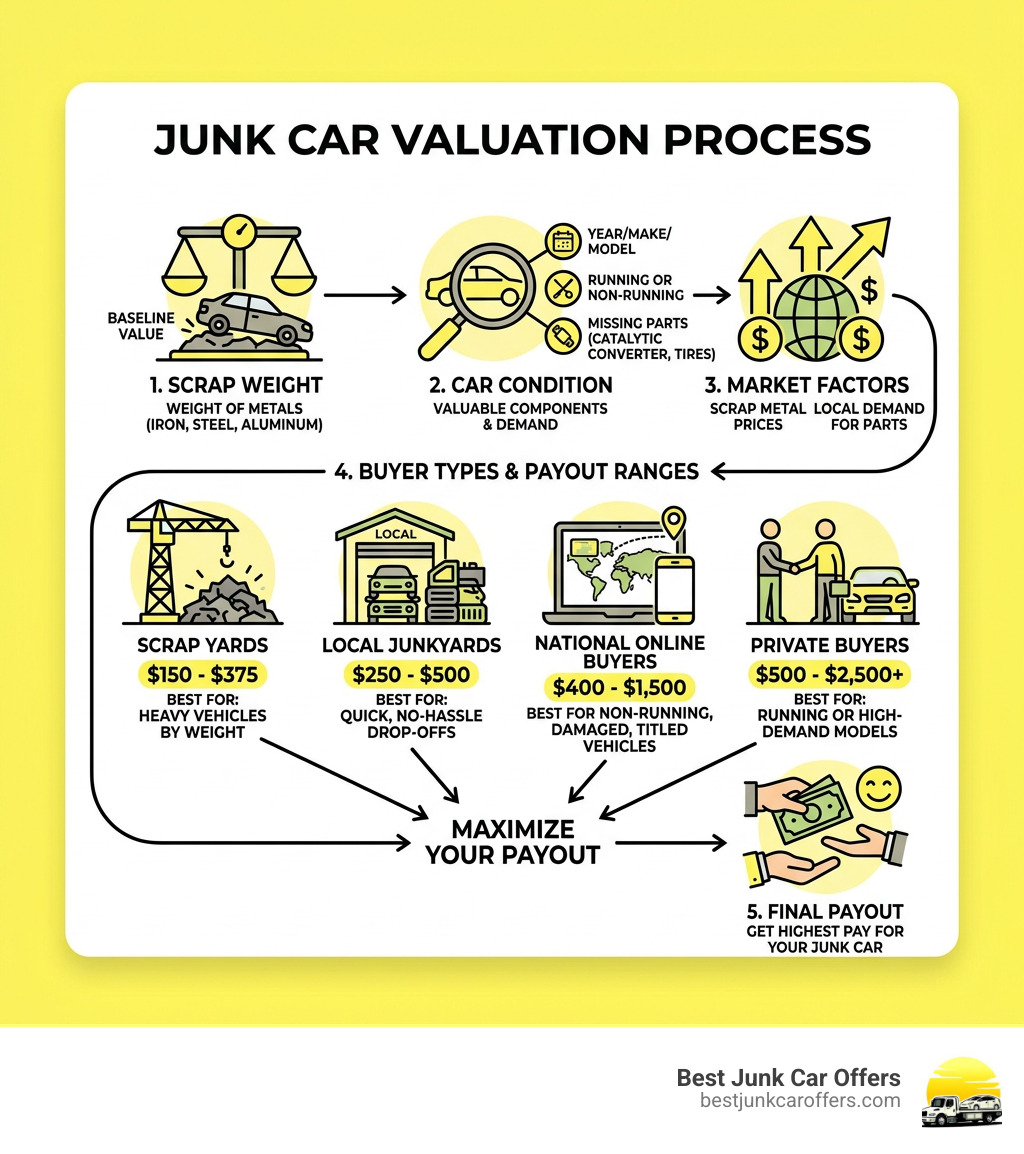
| Buyer Type | Average Payout | Best For |
|---|---|---|
| National online buyers | $400 – $1,500 | Non-running, damaged, or titled vehicles |
| Local junkyards | $250 – $500 | Quick, no-hassle drop-offs |
| Scrap yards | $150 – $375 | Heavy vehicles sold by weight |
| Private buyers | $500 – $2,500+ | Running or high-demand models |
The gap between a lowball offer and a top-dollar payout often comes down to three things: who you sell to, when you sell, and what condition your car is in.
Most people with a broken-down vehicle take the first offer they get. That’s usually a mistake. National online buyers pay 15 to 30% more than local junkyards for non-running vehicles, simply because they tap into larger networks of parts buyers, rebuilders, and recyclers.
Scrap metal prices, your car’s make and model, its weight, and even the time of year all affect your final number. A 5,000-pound Ford F-150 is worth far more than a 2,500-pound compact — and selling in summer can add another 10 to 15% on top.
This guide breaks down every factor that affects your payout, compares the top buyers, and shows you exactly how to get the most cash for your junk car — fast.
Factors That Determine the Highest Pay for Junk Cars
When we evaluate a vehicle, we aren’t just looking at a pile of rust. We are looking at a complex assembly of materials and components that each have their own market value. To get the highest pay for junk cars, you need to understand what makes your specific vehicle attractive to a buyer.
The most significant factor is the curb weight of the vehicle. Most junk cars are 55% to 65% steel. If you are selling a heavy-duty pickup like a Chevrolet Silverado 1500, which can weigh over 5,000 pounds, you are looking at a much higher baseline than a 2,500-pound compact sedan.
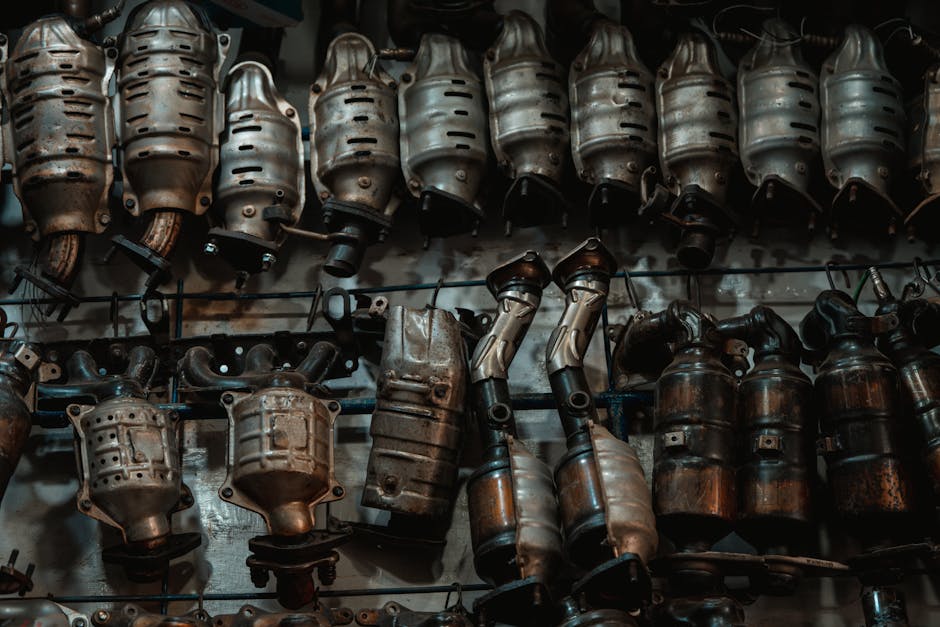
However, weight isn’t the only thing that matters. Modern vehicles are “rolling mines” of precious metals. The catalytic converter is often the most valuable single part of a junk car because it contains platinum, palladium, and rhodium. Depending on the model, a catalytic converter alone can add between $50 and $450 to your offer. Similarly, aluminum wheels are worth significantly more than steel rims, and a functional engine or transmission can double the offer if the buyer intends to resell the parts rather than just crushing the shell.
How Scrap Metal Prices Influence the Highest Pay for Junk Cars
The “floor” of your car’s value is set by the global commodities market. Scrap metal rates fluctuate daily based on demand from construction and manufacturing industries. In 2025, we’ve seen scrap prices hover between $150 and $200 per ton, with a national average of approximately $175 per ton.
For example, a mid-size car weighing 3,750 lbs (1.875 tons) would have a raw scrap value of roughly $281 to $375. If you see a spike in steel or aluminum prices, that is the best time to request a quote. Our 2026 pricing data suggests that these rates may stay volatile, moving 3% to 7% weekly, so timing your sale during an economic upswing can put extra cash in your pocket.
High-Value Models and Parts Demand
Not all junkers are created equal. Some vehicles are worth more because their parts are in high demand on the secondary market. If you own a popular model like a Honda Civic, Toyota Corolla, or Ford F-150, we can often offer more because we know those parts will sell quickly to mechanics and DIYers.
High-demand models include:
- Toyota Tacoma: Known for incredible resale value, even with high mileage or frame issues.
- Jeep Wrangler: A favorite for enthusiasts; even a wrecked Wrangler has valuable suspension and body components.
- Subaru Outback: High demand for drivetrain components and electronics.
- Hybrid/Electric Vehicles: These often fetch 30% to 50% more than gas cars because of the copper wiring and the lithium-ion batteries, though they require specialized recycling.
National Online Buyers vs. Local Junkyards: Who Pays More?
This is the age-old question for sellers. Should you call the guy with the tow truck down the street, or use a national online platform? The data shows a clear winner for those seeking the highest pay for junk cars.
| Feature | National Online Buyers (Like Us) | Local Scrap Yards |
|---|---|---|
| Average Payout | $450 – $1,500 | $250 – $500 |
| Towing | Always Free | Often deducted from offer |
| Pricing Model | Parts Demand + Scrap Value | Strictly Weight-Based |
| Convenience | Instant Online Quote | Must call or visit in person |
| Paperwork | Handled by the buyer | Seller often responsible |
Local yards usually have high overhead and limited buyers. They pay you the “scrap” price because they need to make a profit by selling the metal to a middleman. National online buyers, however, use technology to connect your car to a massive network of recyclers, exporters, and part-seekers. This competitive bidding environment is why online platforms typically pay a 15% to 30% premium over local options.
If you want to move fast, check out our guide on How to Sell Your Car Quickly for the Most Cash.
Why Online Platforms Offer the Highest Pay for Junk Cars
The secret sauce of online platforms is the “network effect.” When you submit your vehicle details to us, we aren’t just checking the local scrap price. We are checking real-time market benchmarks and seeing if there is a rebuilder in another state who needs your specific engine.
Real-world experiences back this up. For instance, Amanda Beth Fazenbaker found that the process was seamless and the payouts were competitive compared to local lowball offers. By removing the middleman and using data-driven quotes, we ensure you get a “no-haggle” price that reflects the true market value of the vehicle.
The Pros and Cons of Local Scrap Yards
Local scrap yards aren’t all bad. They are great if you have a vehicle that is truly just a shell—no engine, no tires, and no valuable parts. Since they buy strictly by weight, they don’t care about the make or model.
However, the downsides are significant. You may have to negotiate hard to get a fair price, and many local yards will deduct a “towing fee” from your final check, which can eat up $50 to $100 of your profit. Before you go that route, ask yourself: Is Selling My Junk Car Worth It? If the car is complete, the answer is almost always yes—but only if you avoid the local scrap-weight trap.
How to Maximize Your Payout in 2025-2026
To squeeze every dollar out of your clunker, you need to think like a buyer. Preparation is the key to moving from a “scrap” offer to a “top-dollar” offer.
- Keep it Complete: The single biggest mistake sellers make is stripping parts off the car. A car missing its catalytic converter, battery, or tires is viewed as “incomplete” and can lose 50% of its value instantly. Most junk haulers won’t even tow a disassembled vehicle.
- Get Multiple Quotes: Never settle for the first number you hear. Get at least three quotes to establish a baseline.
- Time the Market: Summer is the “golden hour” for junk cars. Metal demand typically peaks in the warmer months, leading to a 10% to 15% price bump.
- Clean it Out: While trash doesn’t affect the price, leaving personal items or heavy debris inside can actually lower your offer if the yard has to pay to dispose of your old tires or household trash.
Ready to see what your car is worth? You can Sell Your Car through our streamlined process today.
Understanding Scrap Value vs. Junk Car Value
There is a massive difference between “scrap value” and “junk car value.”
- Scrap Value: This is the price of the raw metal. If your car is crushed or stripped, you get the scrap value (around $150-$350).
- Junk Car Value: This includes the scrap value plus the value of salvageable components like the alternator, starter, GPS system, and body panels.
By selling to a buyer who values parts harvesting, you can see a 2x to 3x increase in your payout. Customers like Liliana Barranco have noted that accurate descriptions of the car’s condition helped them secure much better offers than they expected for “just a junker.”
Regional Price Variations and State Trends
Where you live matters just as much as what you drive.
- West Coast: Higher demand for Asian imports (Toyota, Honda) leads to higher premiums.
- Midwest: Trucks and SUVs are king. A rusted-out 4×4 in Michigan might fetch more than the same truck in Florida because of the demand for used drivetrain parts.
- Urban Areas: Higher competition among junkyards in cities like Detroit or Los Angeles usually drives prices up.
- Northeast: Scrap rates are often higher here due to proximity to major shipping ports and steel mills.
Paperwork and Title Requirements for a Smooth Sale
Paperwork is the “boring” part of the process, but it’s what stands between you and your cash. To sell a junk car legally in the U.S., you generally need a valid vehicle title and a government-issued ID.
Having the title in your name is the fastest way to get paid. It proves ownership and allows the buyer to recycle or resell the vehicle without legal hurdles. However, we know that life happens—titles get lost in moves or destroyed in accidents.
If you are worried about paperwork, check out our guide: No Title No Problem: How Best Junk Car Offers Makes It Easy.
Selling Without a Title
Can you still get the highest pay for junk cars without a title? In many cases, yes.
- Older Vehicles: Some states allow you to sell a vehicle that is 15-20 years old with just a Bill of Sale and a registration.
- Duplicate Titles: If the car is in your name, you can often apply for a duplicate title at your local DMV for a small fee (usually $20-$50).
- Peddle Integration: Through our partnership with Peddle, we can often navigate no-title situations by verifying ownership through other means, depending on state laws.
Sellers like Jason M Asher have shared that even with complex documentation issues, professional buyers can often find a path forward that local yards won’t touch.
Frequently Asked Questions about Junk Car Payouts
What is the average payout for a junk car in 2025?
While the range is broad ($100 to $1,500), the average payout in 2025 is approximately $512. Heavier vehicles (trucks/SUVs) and those with high-demand parts (Hondas/Toyotas) sit at the higher end of that scale, while small, stripped-down compacts sit at the lower end.
How quickly can I get paid and have the car picked up?
Speed is one of our top priorities. Most pickups happen within 24 to 48 hours. In many urban areas, we can even offer same-day pickup. You get paid on the spot—usually via a corporate check or digital payment—the moment the tow truck driver hooks up your vehicle.
Can I sell a non-running or damaged car for top dollar?
Absolutely. We specialize in vehicles with mechanical failure, blown engines, transmission issues, and even total loss accident damage. Because we look at the salvage value of the parts and the raw metal, a car that doesn’t start can still be worth hundreds or even thousands of dollars.
Conclusion
Getting the highest pay for junk cars doesn’t have to be a stressful experience. By understanding the value of your car’s components, timing your sale with the scrap market, and choosing a national online buyer over a local scrap yard, you can significantly increase your payout.
At Best Junk Car Offers, we make the process transparent and easy. We provide instant quotes, free nationwide towing, and same-day payment. Whether your car is running, totaled, or missing a title, we are committed to giving you a fair, competitive price while ensuring the vehicle is recycled in an eco-friendly manner.
Stop letting that old clunker take up space in your driveway. Get the highest pay for your junk car today and turn your “trash” into instant cash!